Nurse practitioner salary trends 2025: Opportunities, challenges, and paths to higher pay
January 7, 2026
The latest Medscape 2025 APRN Compensation Report offers a nuanced snapshot of nurse practitioner salaries today. After several years of modest growth, average nurse practitioner compensation actually dipped in 2024, even as workloads and demand for NPs continued to rise. The survey, which gathered insights from nearly 2,500 APRNs, including more than 1,500 NPs, highlights the wide variation in compensation by employer type, practice setting, region, and experience level.
Taken together, the findings show an increasingly complex pay landscape where raises are less common, salary satisfaction is uneven, and many NPs are turning to supplemental work to close the gap.
Average gross NP salary
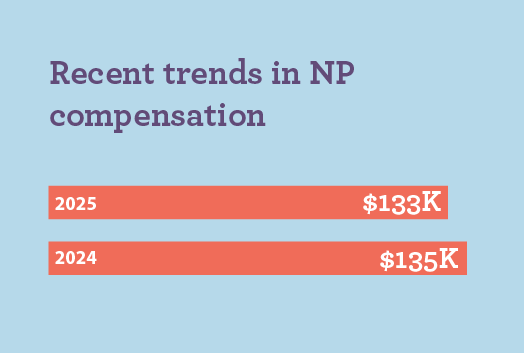
The report shows that the average total compensation across all APRNs reached $153k in 2024. However, NPs fell below that overall benchmark, reporting an average of $133k this year—a slight decline from $135k the previous year. This not only highlights the pay gap between NPs and other APRN roles but also reflects the broader trend of softened NP compensation in 2024.
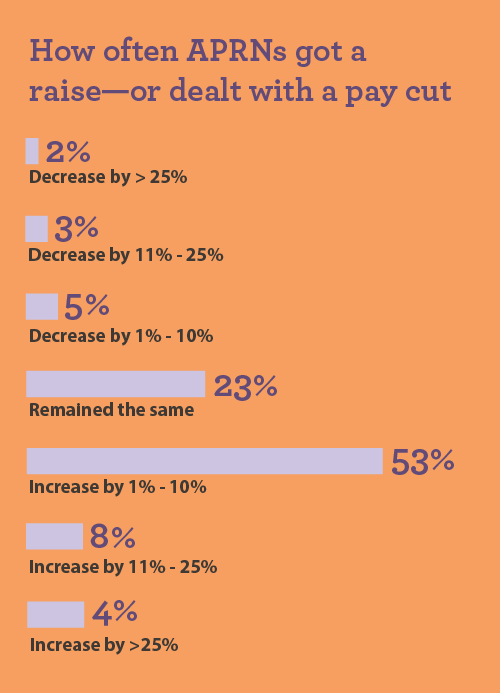
Approximately half of the APRNs surveyed reported receiving a modest raise in the past year, while another quarter said their pay remained flat year over year. Among those who saw increases of more than 10%, industry experts note that such significant bumps were most likely the result of changing jobs rather than the typical yearly raise.
Salaried vs. hourly compensation
This year’s compensation trends show a shift in how pay structures are evolving across advanced practice roles. While hourly APRNs still outpace their salaried counterparts in terms of earnings ($168k compared to $149k), salaries continue to rise, and overall hourly earnings have dipped slightly, narrowing the gap that has traditionally favored hourly clinicians. For nurse practitioners, this trend is even more pronounced: Hourly NPs have historically earned more than their salaried counterparts, but that margin tightened this year, with salaried NPs reporting a slight edge in average annual compensation.
NP pay by practice setting
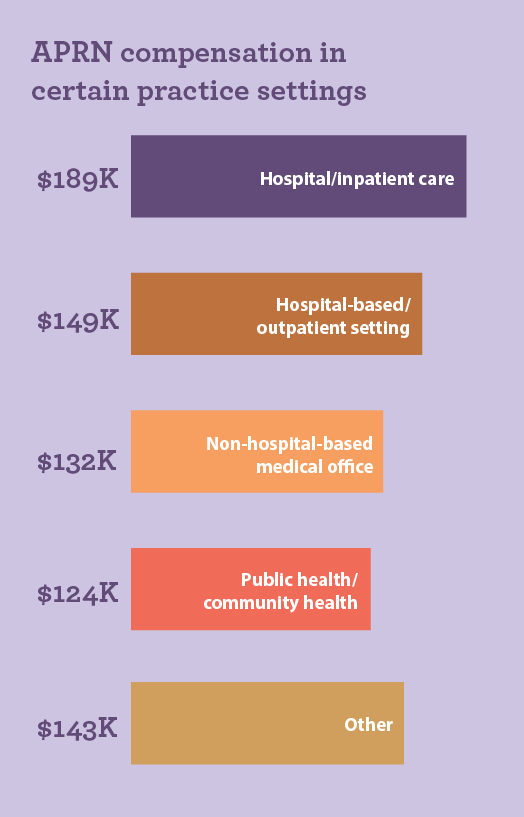
Compensation for APRNs varies significantly by practice setting, with the highest average earnings found in hospital inpatient care roles, where survey respondents reported average salaries of $189k. Hospital-based outpatient settings also pay well, averaging $149k, followed by “other” clinical environments at $143k. APRNs in non-hospital-based urgent care and medical offices reported average pay of around $132k, while those working in community health and public health settings trailed behind at $124k.
You have more choices than you think: 10 NP career alternatives
NP pay by tenure, employer type
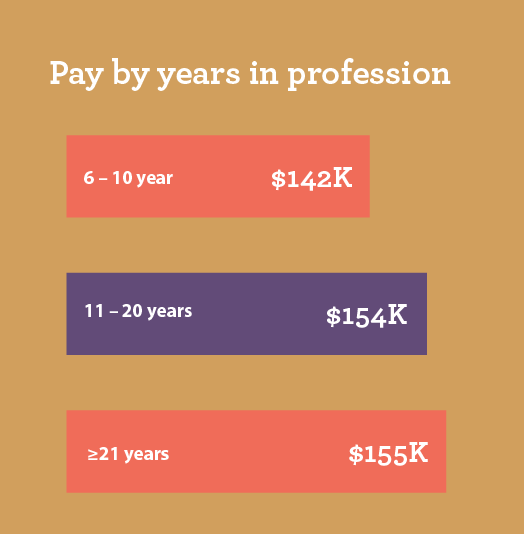
Compensation for APRNs generally rises with experience, but earnings tend to level off after two decades in the field.
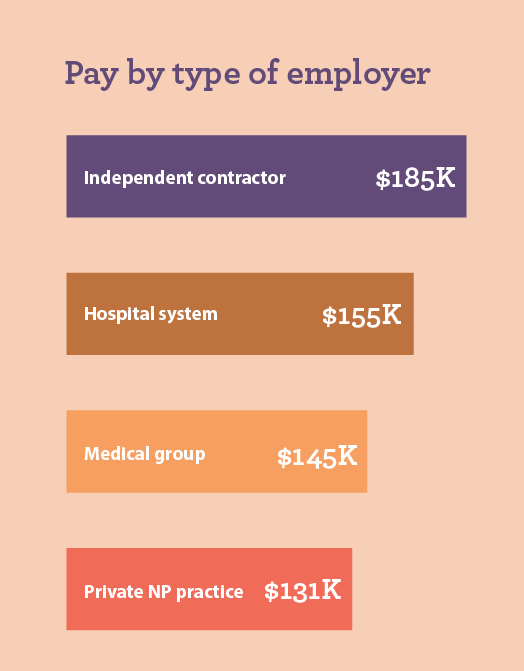
Employer type also plays a significant role: Independent contractors and per‑diem clinicians often out-earn their full-time counterparts in hospital systems, medical groups, and private practice, reflecting the premium paid for flexibility and temporary staffing. For NPs, this highlights that while longevity brings higher pay early and mid-career, contract work can offer a path to higher compensation even later in a career.
As veteran locum tenens nurse practitioner Sophia Khawly notes, the financial benefits of locum work can extend well beyond higher pay.”

Locum tenens is more than a flexible way to practice medicine—it can also be a path to financial independence.
“With higher pay, covered expenses, and tax advantages, locum tenens work allows clinicians to save more money and potentially retire years ahead of schedule. Locum tenens can definitely fast-track your path to retirement."
Retire early: How locum tenens can help grow your savings
NP salary needs, satisfaction, reality
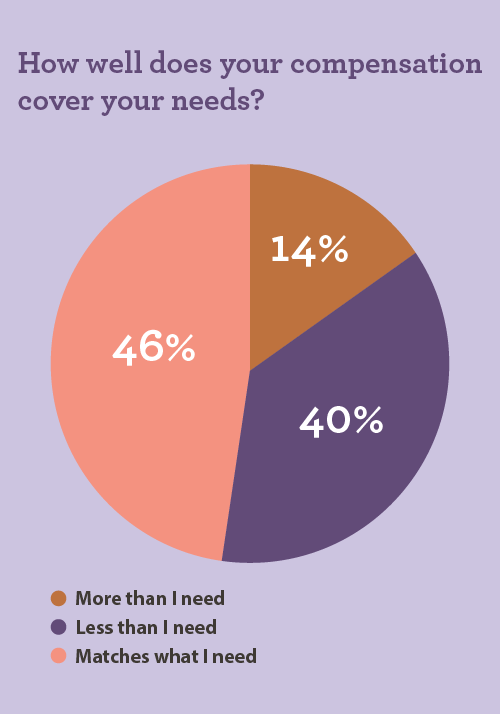
When asked how well their compensation meets their personal needs, 14% of APRNs said they earn more than they need, while 46% said their pay matches what they need. Notably, 40% reported earning less than what they need, with nurse practitioners being the most likely to feel undercompensated, highlighting ongoing gaps between pay and financial expectations for many NPs.
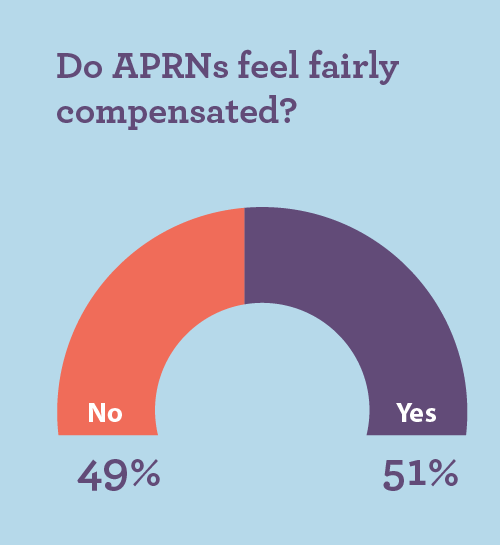
When asked whether their compensation fairly reflects the demands of their work, roughly half of APRNs surveyed said they feel unfairly compensated. Among NPs, dissatisfaction was even more pronounced—53% of NPs reported that their pay falls short of what they believe they deserve, making them the subgroup most likely to feel underpaid.
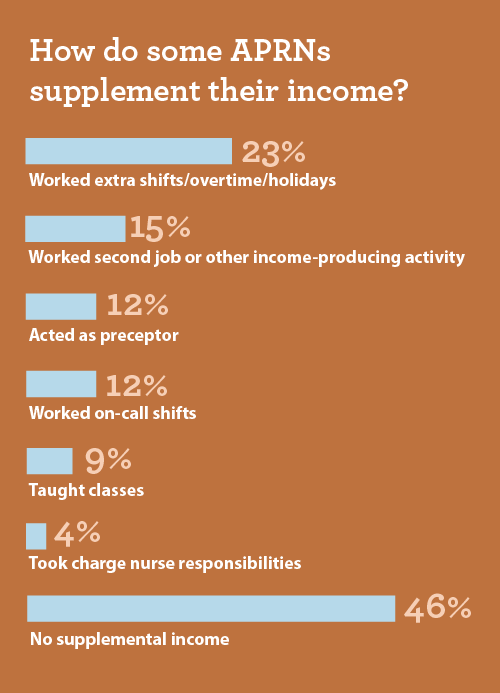
More than half of APRNs reported turning to supplemental work outside their primary jobs to boost their earnings, such as additional shifts, preceptor roles, or charge nurse responsibilities. Other opportunities, such as locum or independent contractor roles, can also provide flexible ways to increase income and broaden experience.
For family nurse practitioner Nidhi Singh, a shift to a locum tenens telehealth role “was definitely worth it.”
“I am definitely making way more than what I was making in the brick-and-mortar setting,” says Singh. “I also feel like the compensation has been very much fair to what we are doing.”
What are my skills worth? How locums pay works for NPs
Nurse practitioner pay by region
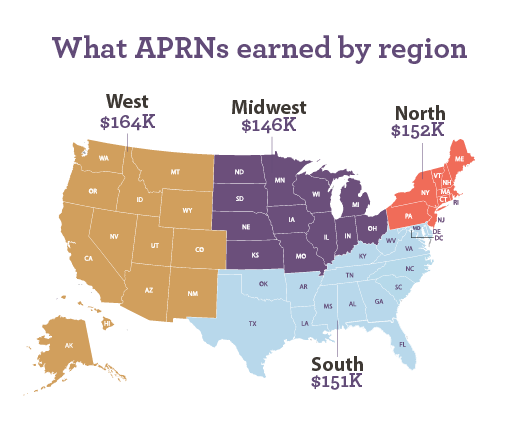
Compensation for APRNs varies by region, with the highest average pay in the West at about $164k and the lowest in the Midwest at around $146k. While these differences highlight local market dynamics and demand for providers, cost of living is an important factor to consider: higher salaries may be offset by higher housing and living expenses, whereas lower-paying regions may offer greater purchasing power and more disposable income.
Despite the modest compensation gains in recent years, opportunities to enhance earnings remain for nurse practitioners. Factors such as continued education, specialization, strategic practice-setting choices, and supplemental roles like locum or independent contractor work can help close the gap between pay and financial needs. These opportunities also offer flexibility, new experiences, and the potential for greater financial independence. By understanding the complex NP compensation landscape, including regional differences, employer type, and supplemental work options, nurse practitioners can make informed decisions that maximize both earnings and professional fulfillment.
Ready to take your NP career to the next level? CompHealth can help you achieve your goals. Call us today at 800.453.3030 or explore current NP job opportunities.